
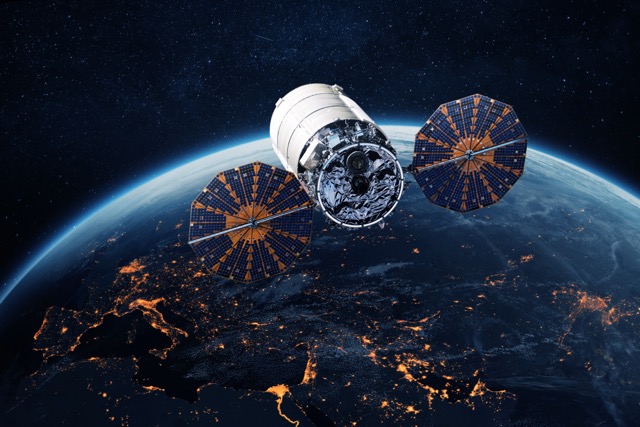
Throughout history, humanity’s conflicts have evolved in lockstep with its technological frontiers. From battles on land and sea to the dominance of the air in the 20th century, each domain brought new tactics, weapons, and doctrines. Following the digital revolution, cyberspace emerged as the fourth warfighting domain, transforming how nations project power, defend sovereignty, and deter aggression.
Now, a fifth domain has fully arrived — space. No longer a peaceful void reserved for exploration and science, space has become an arena of strategic competition, intelligence collection, and, increasingly, potential conflict. Nations are racing to secure orbital dominance, safeguard their satellites, and develop capabilities that blend terrestrial and extraterrestrial defense into one seamless architecture.
The implications are profound: space is not simply a vantage point, it is the new high ground in global security.
From exploration to militarization
The militarization of space is not a new concept. As early as the 1960s, satellites supported reconnaissance, weather forecasting, and navigation for military forces. But for decades, activities in orbit remained largely uncontested. The balance of deterrence and the shared recognition of mutual vulnerability, much like the nuclear standoff, maintained a fragile peace.
Following the attacks of September 11 2001, the United States accelerated its focus on strategic domains. The creation of U.S. Space Command (USSPACECOM) marked a defining moment, officially designating space as the fifth warfighting domain. The move acknowledged that future conflicts would not be confined to land, sea, air, or cyberspace, they would extend into orbit, where satellites are both critical enablers and high-value targets.
Since then, other nations have followed suit. China, Russia, India, and members of the European Union have established space commands and defense units dedicated to orbital security. Europe is taking major steps toward strategic autonomy in space with the launch of the IRIS² satellite program, a €10–11 billion initiative aimed at creating a sovereign, secure European connectivity network. IRIS² (Infrastructure for Resilience, Interconnectivity and Security by Satellite) will provide encrypted governmental communications and resilient broadband across Europe, Africa, and the Arctic, reducing dependency on non-European constellations.
Together, these developments mark a clear transition: the once “shared commons” of space has become a contested operational environment, one where economic power, technological capability, and national defense are increasingly intertwined.
Space as the ultimate enabler of modern warfare
Modern militaries depend on space to an extent that few civilians realize.
- Intelligence, Surveillance, and Reconnaissance (ISR)
Continue reading by signing in or creating a free account to access the full article and exclusive insights.
You might also like

Unlocking additional applications for existing optical fibre infrastructure

Neutral Host Networks, the smarter infrastructure model transforming connectivity, reducing costs, and future-proofing buildings

When cyber risk becomes patient risk